

YVR Prepares for Low Visibility Operations
Weather is one of the most significant factors when it comes to flight operations. And while our summer weather lasted well into September this year, fall weather is right around the corner, bringing with it increased rain, occasional fog, and lowered cloud ceilings.
Because safety is our top priority, conditions like heavy rain, fog, and wind that lead to lower visibility at the airport require our YVR teams to be flexible and responsive.
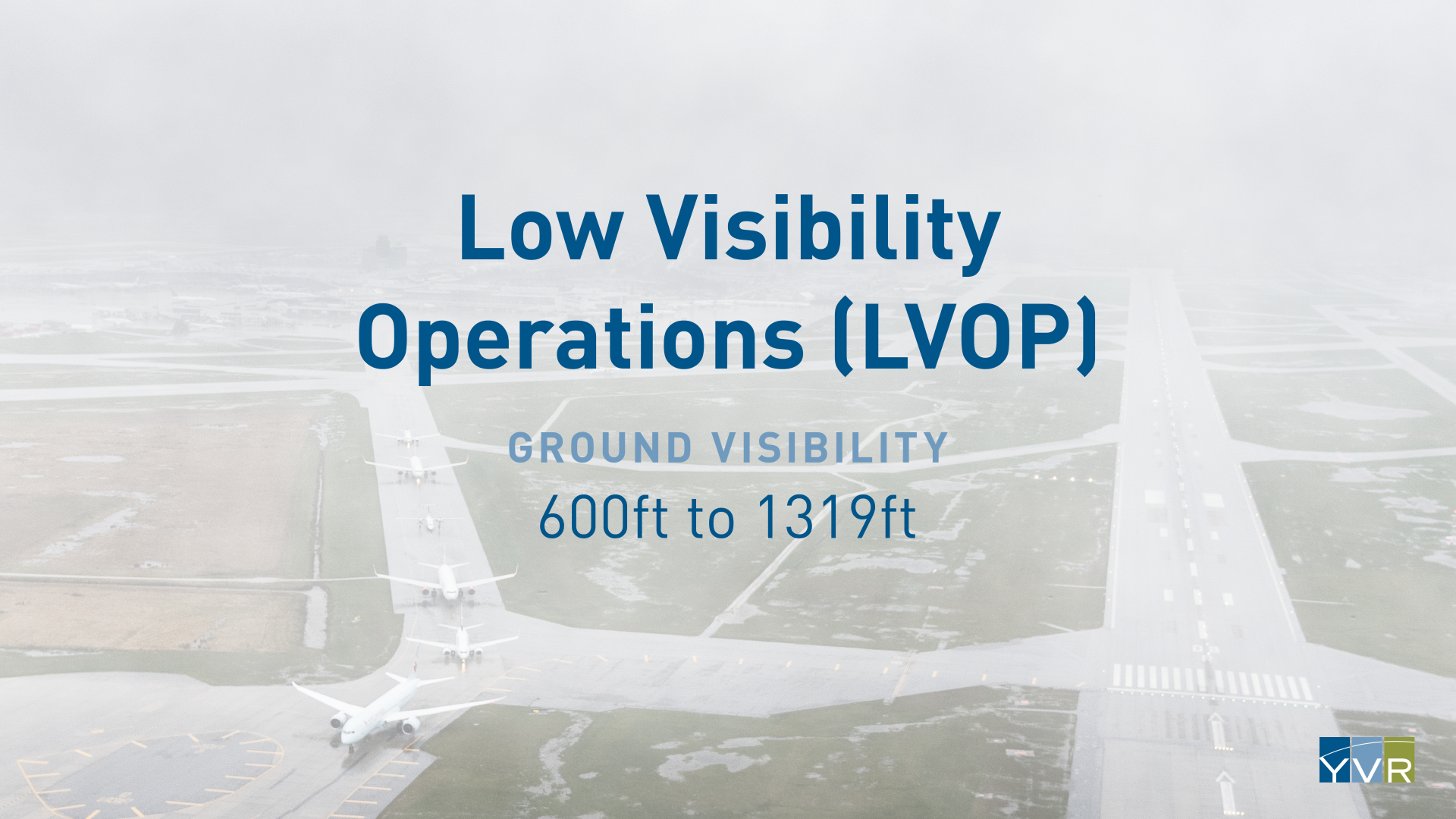
In the simplest terms, visibility refers to how well and how far you can see around you. In aviation, visibility is measured based on how far away a pilot can see and recognize the runway. This is called Runway Visual Range (RVR). Reduced visibility operations (RVOP) kick in when pilots can only see the runway or runway lights from a distance of 2,640 feet or less. To put that into perspective, that’s like standing at BC Place and judging whether you can see Science World across False Creek. Low visibility operations (LVOP) are triggered when visibility drops to below 1,320 feet or the equivalent of about four Vancouver city blocks.
Like most major airports, YVR has specialized procedures and the latest aviation technology to help keep aircraft moving safely and getting you on your way even in reduced visibility or low visibility situations. We also work closely with NAV CANADA, the country’s air navigation service provider, to adjust the rate of arrivals and departures when needed. Just as drivers allow more space between them and the vehicle ahead in inclement weather, the same goes for aircraft. As a result, fewer planes may be able to land or takeoff per hour in reduced and low visibility conditions. This may cause delays or other impacts to flight schedules.
However, when visibility drops below 600 feet, or when lightning is detected in the immediate vicinity of the airport, safety dictates that take-offs and landings may need to be paused until conditions improve. This is known as a ground stop. These are rare, but when they do happen, please know they are for your safety and that of your fellow passengers, workers, and crew.
So, as we bid goodbye to summer weather and get ready for fall, we recommend passengers always check the status of their flight with their airline or on yvr.ca before arriving at the airport, and to give themselves plenty of time to get to the airport safely in the event of inclement weather.