

“I was waiting for the words ‘exercise, exercise’, but they didn’t come”: YVR employees remember 9/11, 25 years later

For those working at YVR on September 11, 2001, there was no watching history unfold from a distance. With U.S. airspace closed and dozens of flights diverted to Vancouver, 8,500 stranded passengers filled the terminals on top of thousands more whose flights from the airport were suddenly grounded.
As the scale and horror of what had happened in New York, at the Pentagon, and in Pennsylvania became clear, YVR employees found themselves facing an unprecedented situation that no one could have imagined when they woke up for work that morning.
This is their story: a day remembered through the voices of the people who lived it at YVR.
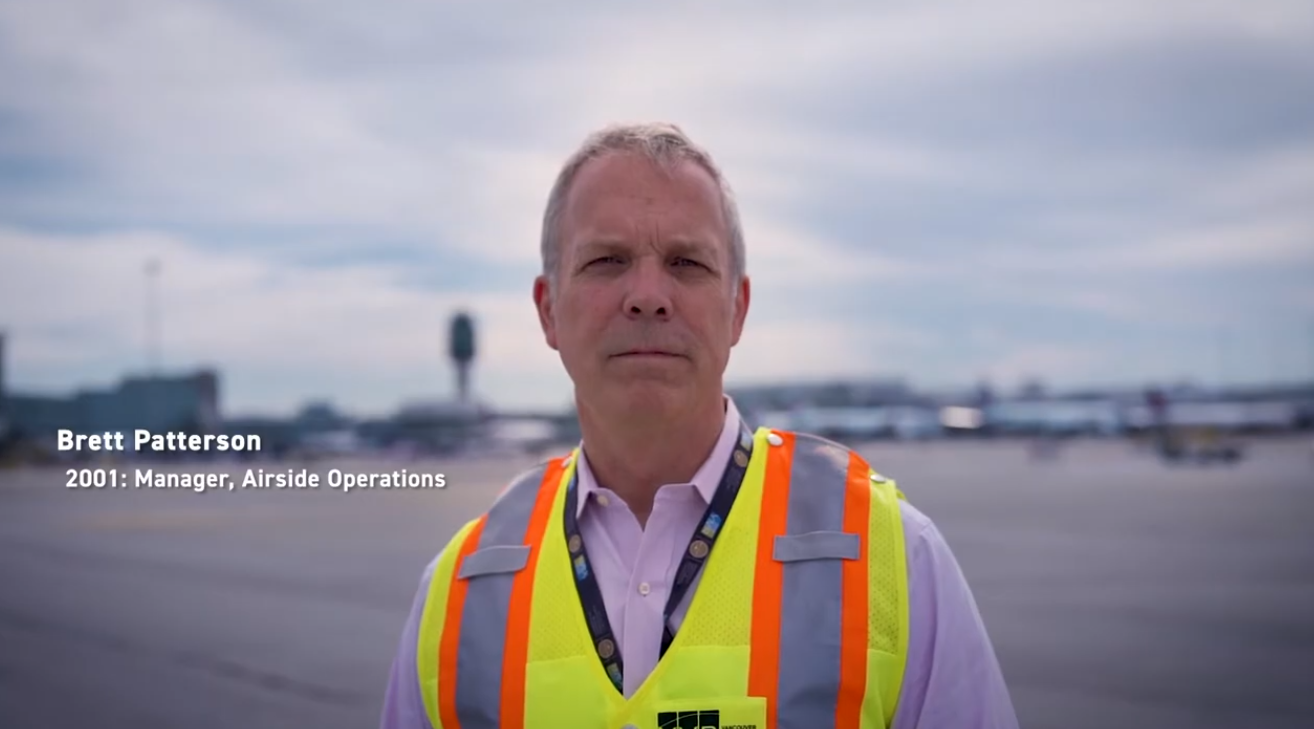
Brett Patterson, Manager, Airside Operations
I was entering the parking lot at YVR when I heard news on the radio about an aircraft crash in New York. It was just before 0600. I went directly to our Operations Centre (where I knew there was a TV) in time to join our Shift Manager (Superintendent Airport Operations was their title at that time) and watched the second plane crash into the towers.
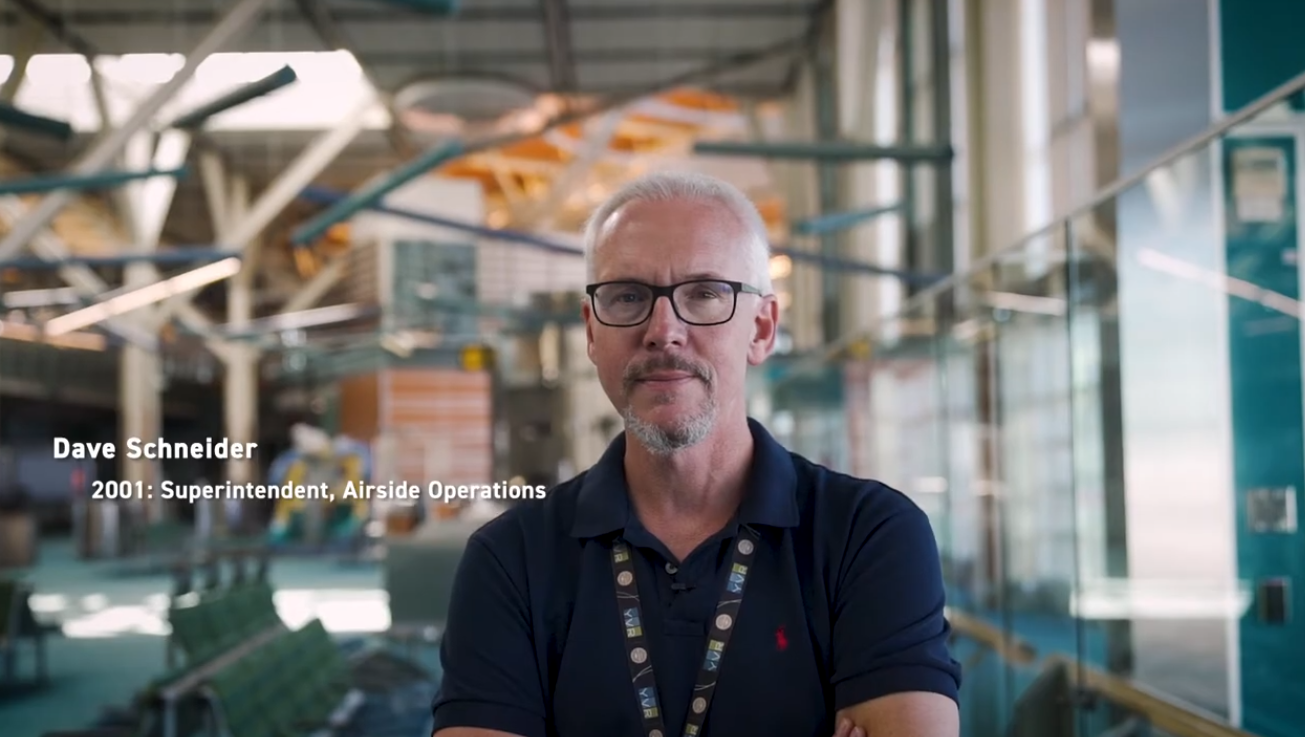
Dave Schneider, Superintendent, Airside Operations
I was attending the SWIFT conference in Calgary, Alberta. I was still in my room preparing for the day when I turned on the news. Seeing the extent of the damage, it was hard to believe. At this point I thought perhaps a small business or recreational aircraft had been involved (my mind wasn’t going toward a coordinated terrorist attack at that stage). As I was watching, the second aircraft struck. I went downstairs to the conference floor and met up with the Superintendent Airfield Operations (Arnie Jassmann) who was also in attendance. They were showing the news on the conference floor big screen, and people were standing around in disbelief.
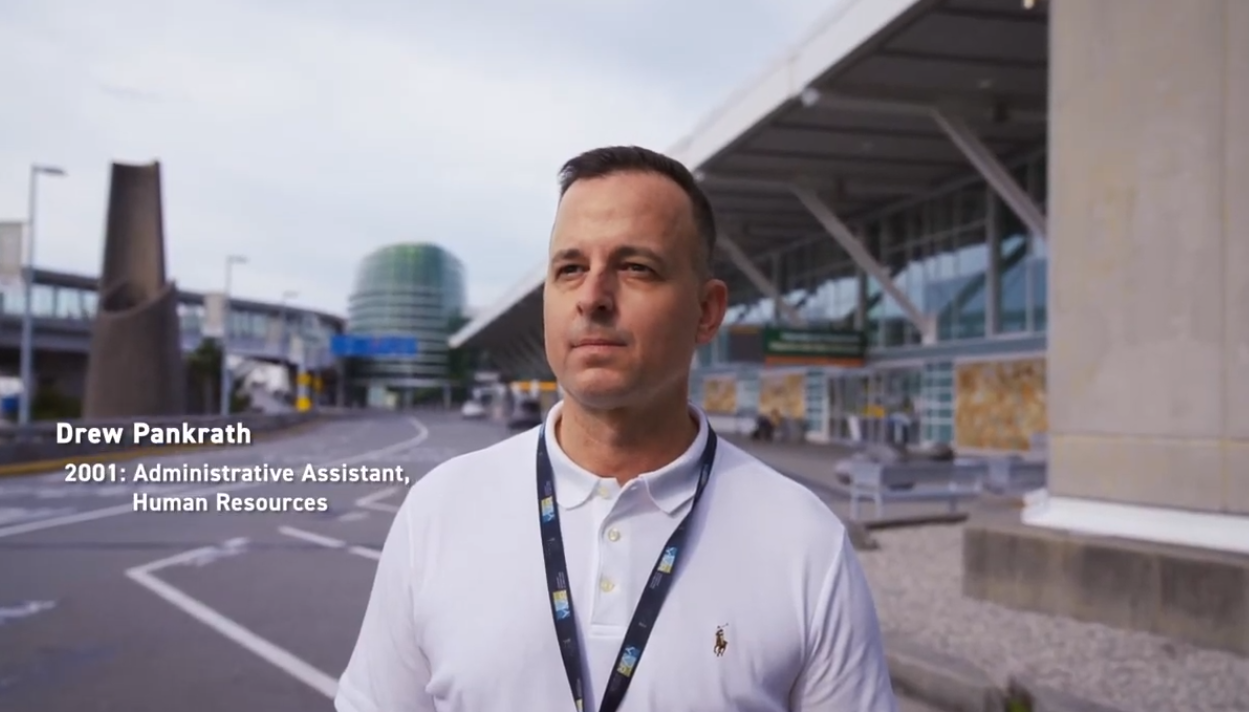
Drew Pankrath, Administrative Assistant, Human Resources
I was working in Human Resources at YVR on September 11, 2001. My role that day quickly became much less about my regular job and much more about helping wherever I was needed. And I was needed most in the terminal, helping people.
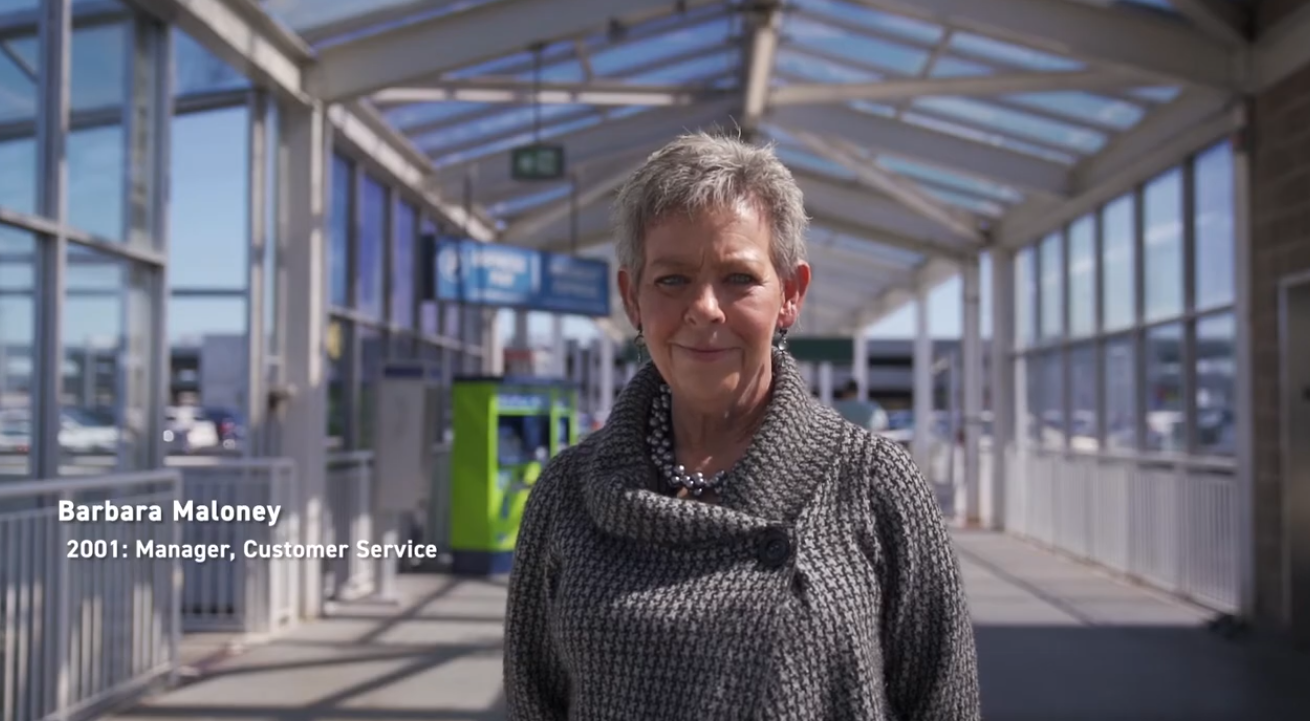
Barb Maloney, Manager, Customer Service
I was just about to leave for work when I received a call from the OPS Shift Manager advising that two planes had crashed into the World Trade Center and that it was not believed to be accidental. I was waiting for the words “exercise, exercise”, but they didn’t come.
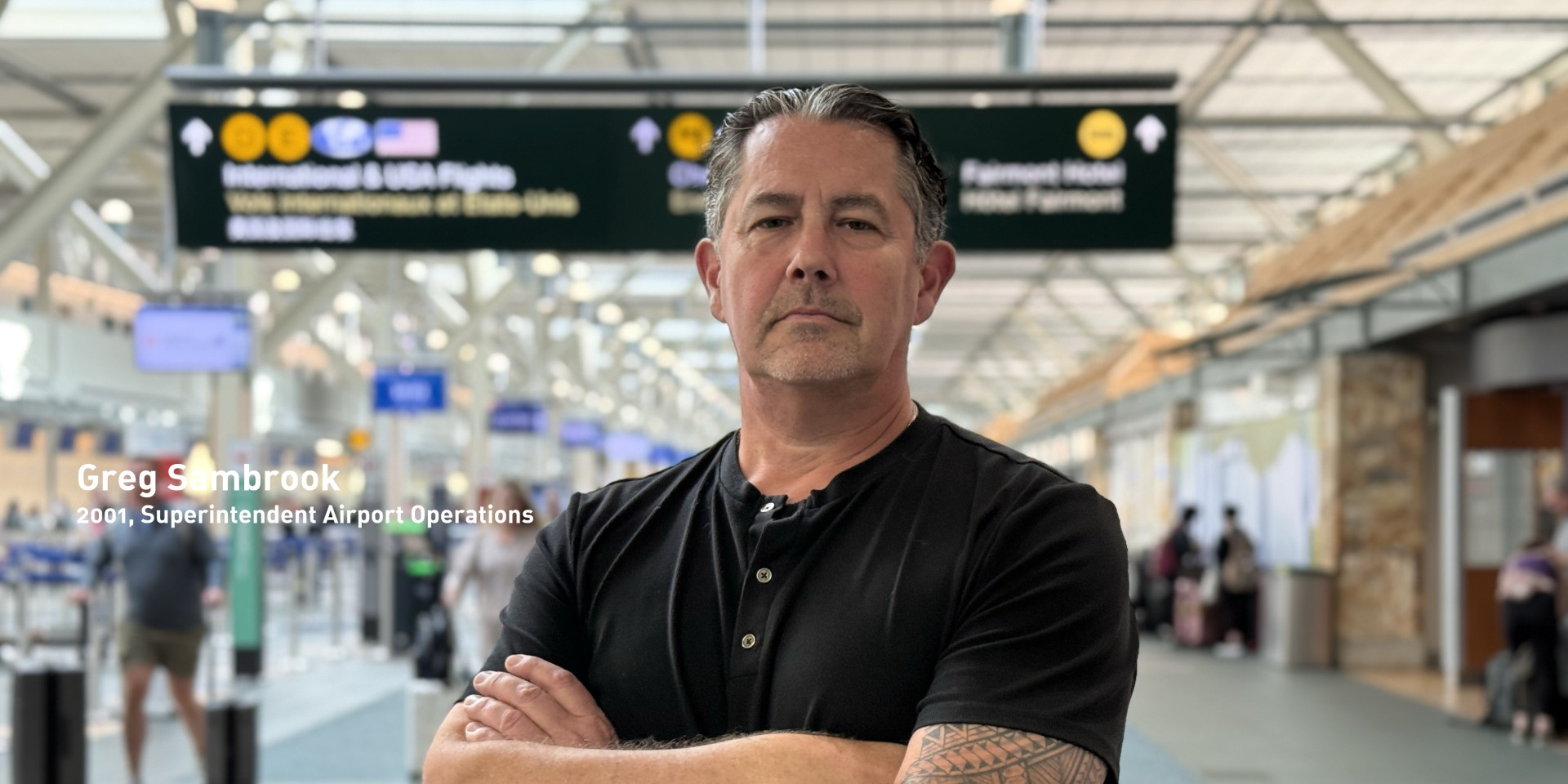
Greg Sambrook, Superintendent Airport Operations
September 11, 2001, was actually my eighth wedding anniversary and the fourth day of my scheduled time off. I first became aware that something extraordinary had happened when my home phone rang shortly before 7 a.m. It was my father-in-law. His first question was, “Why aren't you at work?”
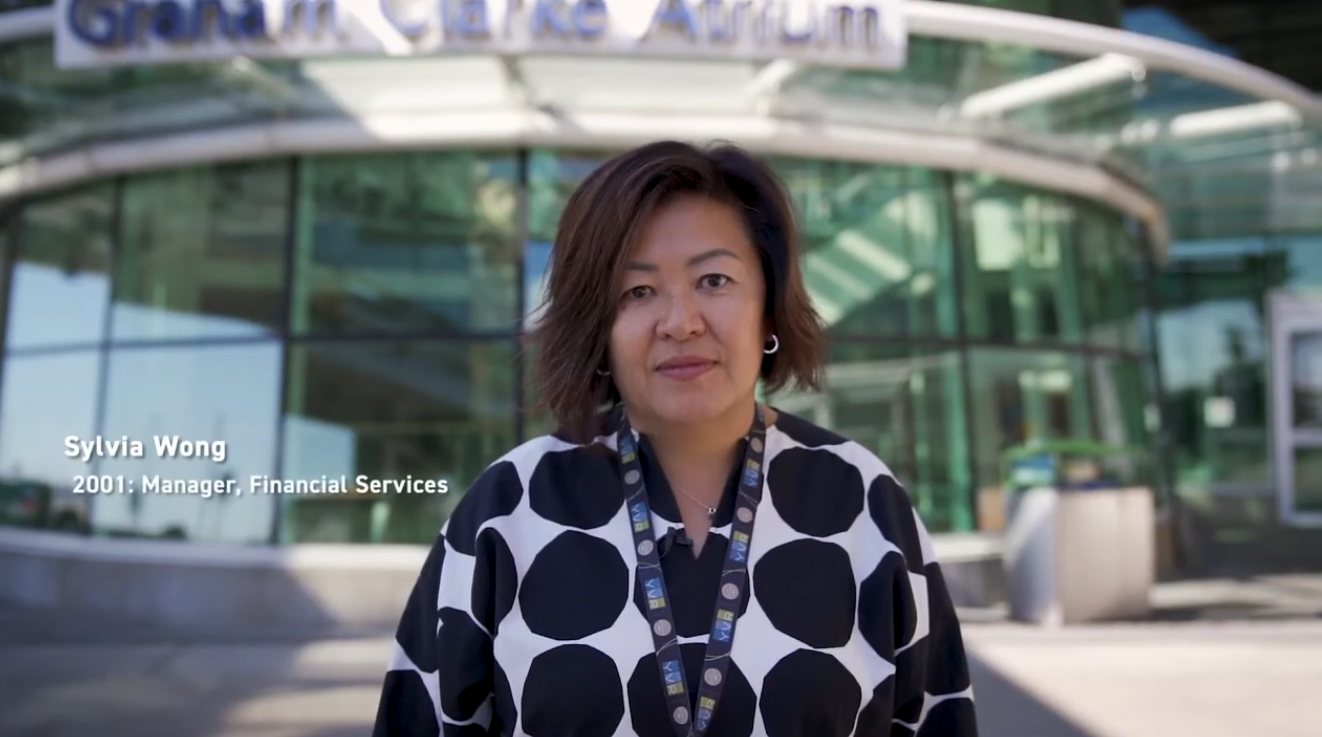
Sylvia Wong, Manager, Financial Services
That’s when it really hit us, it’s going to be massive chaos in the arrivals hall and baggage hall. So at that point, we were like, “All hands on deck. Put our pens down. Put on our vest and get on the floor with everybody else.”
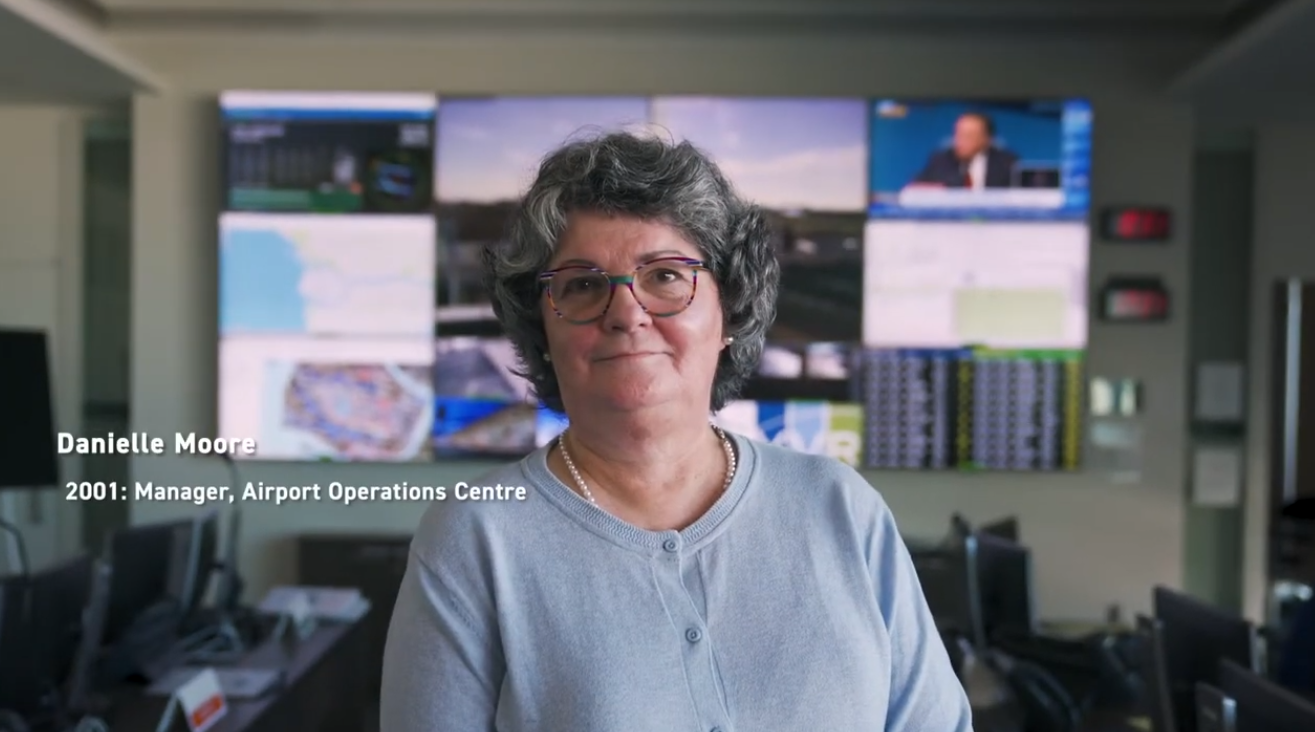
Danielle Moore, Manager, Airport Operations
We had people from our offices who came to help our regular Airport Operations Agents to answer the telephone as we were getting so many phone calls from all over the world, people looking for their loved ones and which airport they had gone to.
At 0645 PDT the Federal Aviation Administration ordered the complete closure of U.S. airspace. All commercial and private planes already in the air were ordered to land immediately at the nearest available airport as part of Operation Yellow Ribbon. For many aircraft and thousands of people, this was YVR.
BP: Once notified that airspace was closing and aircraft would be diverting to us, we immediately put a team on the task of developing an aircraft parking plan.
GS: I looked up and saw a Korean Air 747 being escorted by two Canadian fighter aircraft. Looking north, I could see what appeared to be a highway in the sky, large aircraft circling over the Lower Mainland while awaiting opportunities to land.
DM: Once the order came down to land all the airplanes they had to land. So we ended up seeing all kinds of tails here we hadn’t seen before.
BM: Only passengers and their carry-ons were offloaded from the diverted planes. All checked luggage had to be hand searched by Police and K9. By around 1000 PDT there were more than 100 RCMP on-site. On a typical day back then there were six. Most of the diverted passengers had no idea that they had landed in Vancouver.
DS: As we approached [runway] 08R, we could see aircraft parked in every available space around the airfield – I’ve never seen so many on the ground at one time. Even more strange was the absolute lack of activity – anywhere on the airfield.
BP: Our VP of Operations was on the airfield with a headset and plugging into aircraft to speak with the flight crew and explain what had happened and what we were doing to assist them and their passengers. Most did not know why they were instructed to land at YVR – there weren’t any smartphones in 2001 nor was their live TV on the aircraft.
DP: YVR is normally such a noisy place. You hear the roar of aircraft engines on takeoff and the loud thunder of brakes and engines as aircraft land. That day, that familiar rhythm of aircraft movements suddenly stopped — apart from the remarkable parade of diverted aircraft arriving at YVR. It was such a strange contrast: an airport accustomed to the constant movement of aircraft, suddenly standing still in a way I had never experienced before.
DS: When we disembarked, I was on the phone with Brett and was asked to report into the operations center to assist with the logistics of individually moving each aircraft systematically to a remote area on the airfield where the baggage could be removed and inspected for explosives by the RCMP.
BM: Many of the carriers that diverted here had no staff presence at YVR. There was no one to assist them in getting accommodation, so we stepped in. We worked with Tourism Canada to find rooms for everyone, some as far away as Hope. At the same time, our Operations Center was receiving thousands of calls from the general public offering rooms, apartments, etc.

At 1106 PDT the Canadian government officially closed all Canadian airspace in response to the 9/11 terrorist attacks. This meant all departing flights from YVR were cancelled and the terminal and surrounding roads were quickly filled with people needing assistance.
BM: RCMP put up roadblocks to ensure no additional people could come to YVR.
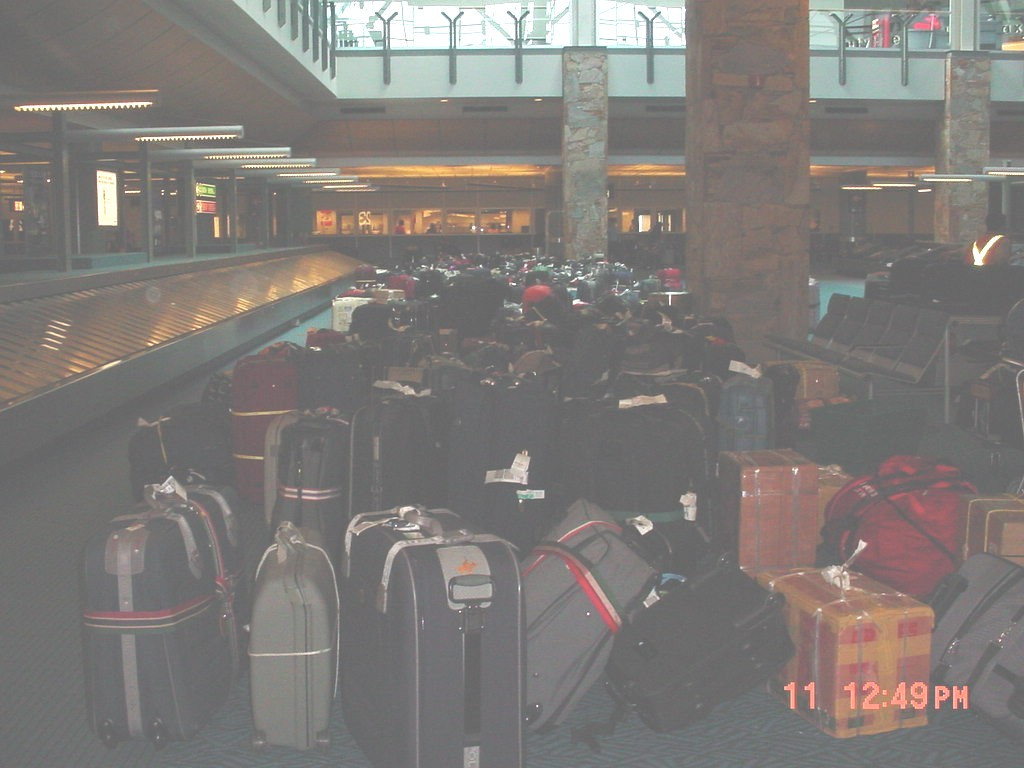
GS: I immediately began working with various internal departments to coordinate the deplaning of passengers, the screening of their baggage, and the inspection of aircraft. At the same time, we were trying to determine how we would manage operations in the days ahead. It quickly became apparent that this would not be a short-term event. Most, if not all, of the operational initiatives that were stood up that day had never previously existed.
BM: We had conference calls with Transport Canada every two hours to discuss changing regulations and what a re-opening of airspace might look like. We also had briefings with all the air carriers 3-4 times a day.
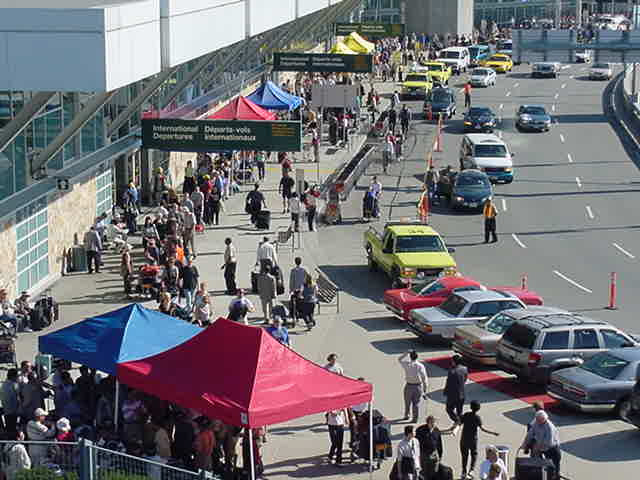
GS: A curbside queuing plan was created to manage and feed passengers into the terminal, again without any existing model to follow. Space was also designated at the curbside for organizations such as the Salvation Army to provide support and food services to stranded passengers and airport employees, an arrangement that had never previously existed. In addition, a program was established to connect stranded travelers with members of the public willing to offer temporary accommodation in their homes, another unprecedented initiative. These examples represent only a portion of the extraordinary measures that were conceived, developed, and implemented in real time.

DP: There was so much uncertainty. People were waiting, not knowing when the airspace would reopen or what was going to happen next. And yet I don't remember a single angry person.
There was a real sense of connection between the passengers and between the passengers and the airport community. People were patient with one another. They shared stories. They helped each other. In a situation that could have so easily become chaotic and frightening, there was an incredible sense of togetherness.
I also remember how quickly people stepped up to help. Employees were doing whatever was needed, regardless of their normal roles. The focus was simply on looking after people and supporting the operation.
On September 12, Canadian airspace slowly permitted limited domestic and essential flights to resume. YVR shifted into recovery.
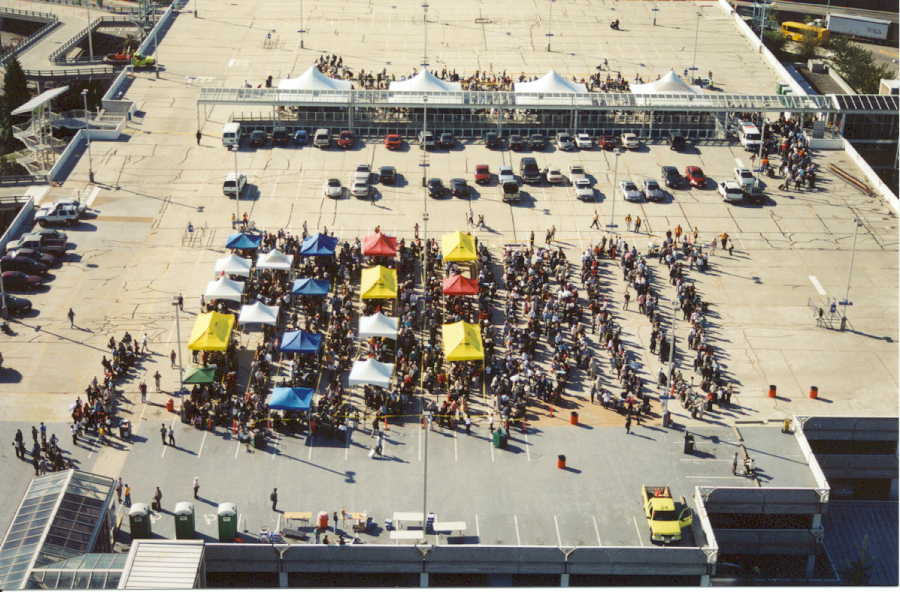
BM: Once the airspace restrictions were eased, people started coming in droves to the airport. There were so many people that we had to queue people on the curb. When we ran out of space on the curb, we relocated cars from the top level of the parkade and created queueing space for domestic and international passengers.
I was responsible for the volunteers that assisted with wayfinding, answering questions, handing out everything from blankets, sunscreen, granola bars, water etc. Many of the volunteers were Airport Authority staff, but also their friends and family. We also had volunteers from the Lower Mainland communities that just wanted to help. The Salvation Army was onsite to provide food and water for everyone.
GS: When our backs were against the wall, people stepped up, adapted, and accomplished what was required, even in the absence of established plans or procedures. That experience demonstrated the professionalism, resilience, and dedication of the team under extraordinary circumstances.
DS: What stands out that day is definitely the teamwork, the resolve, and the mutual support. The “What do you need and how can I help” attitude that prevailed through these very difficult circumstances. We stood as one, and we cared for each other.
BP: We cemented the fact that we are a community airport that day.
DP: I think September 11 taught me that in a very tangible way. In the middle of an unprecedented situation, people didn't necessarily need someone to have all the answers. They needed someone to help them, to listen, to point them in the right direction, and to remind them that they weren't dealing with it alone.
DM: Looking back on it, you do remember the good parts of it. But it was the same group of people working together the same way we do today for Vancouver Airport.

A total of 34 aircraft carrying 8,500 passengers, more than any other Canadian airport, were diverted to YVR on September 11, 2001.
Now 25 years later, many of the operational plans and crisis response protocols remain in place at YVR and the events of that day have shaped our airport community and the aviation industry immeasurably. What also remains is the memory of the lives that were lost and the extraordinary community efforts to keep people safe and comfortable in uncertain times.